Organ recording with boundary microphones
Performance, recording, calculation, programming by Stefan Kießling, 2025
Website tested with Safari 18 and Chrome 143 on macOS 15.6
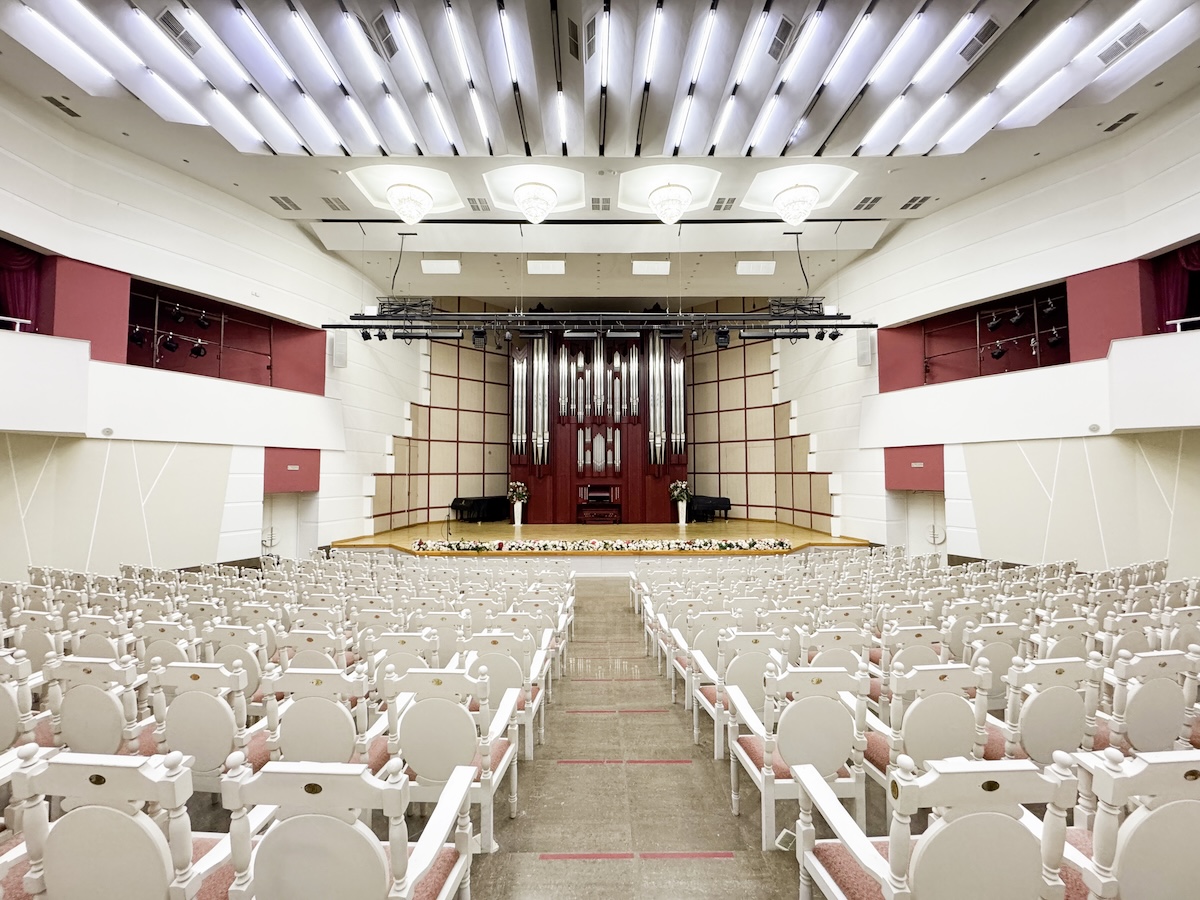
Allegro moderato from Sonata No. 7. Recorded at the organ hall of Astana, Kazakhstan.
Scientific view of the microphone setup, showing the polar patterns in 3D. The boundary microphones microphones have an half-omni pattern. Together with the coincident fig. of eights the form a flexible polar pattern of every cardioid type. Red lobes are indicating phase inversion. The distances between the mics and to the organ are not reflected in this visualization.
Use the triangle mixer as much as you like. Note: The most narrow and most wide sound will be reached at some point before the puck reaches the egde/corner of the triangle.
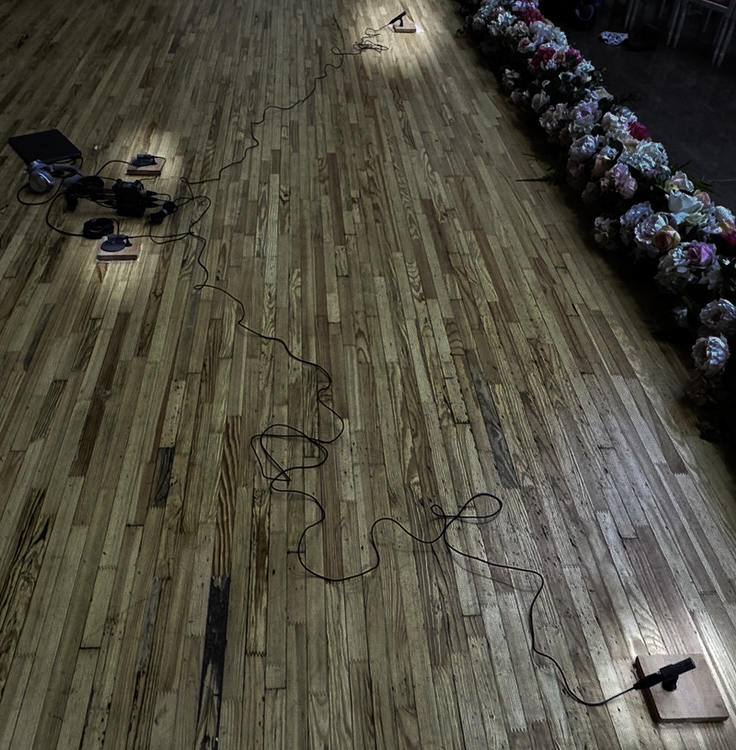
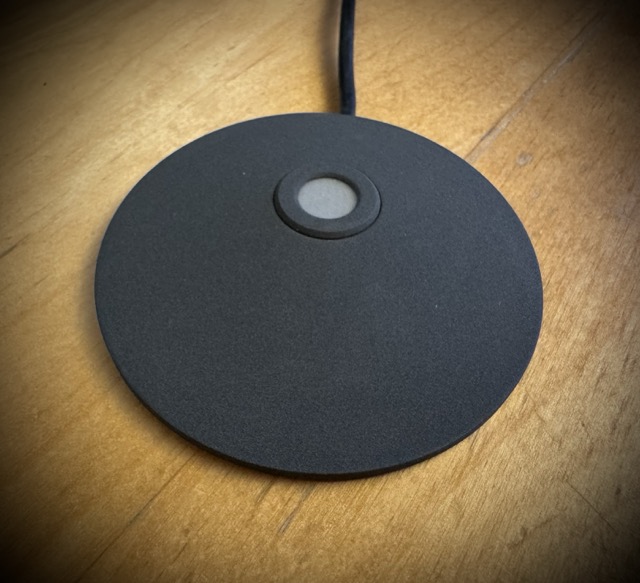
Boundary microphones are meant to be placed on a surface. Therefore they look very different from „normal“ pencil microphones: they are mostly flat with their membrane facing upwards. Microphones always capture direct sound as well as reflected sound from the ground, the ceiling, the walls. As the reflected sound arrives with a certain delay, there is the danger of bad sound coloring because of the combfilter effect. Boundary microphones can avoid at least 1 reflection source - which is the surface where they are placed on. When put on the ground, there will be no reflection from the ground in the captured signal. This is especially helpful in dry rooms. The other advantage is very practical: no need for bringing tall stands. Disadvanteges are the higher sensitivity for mechanical low frequency noise and that it is not possible to places them at a spot where the different organ sections are acoustically balanced.
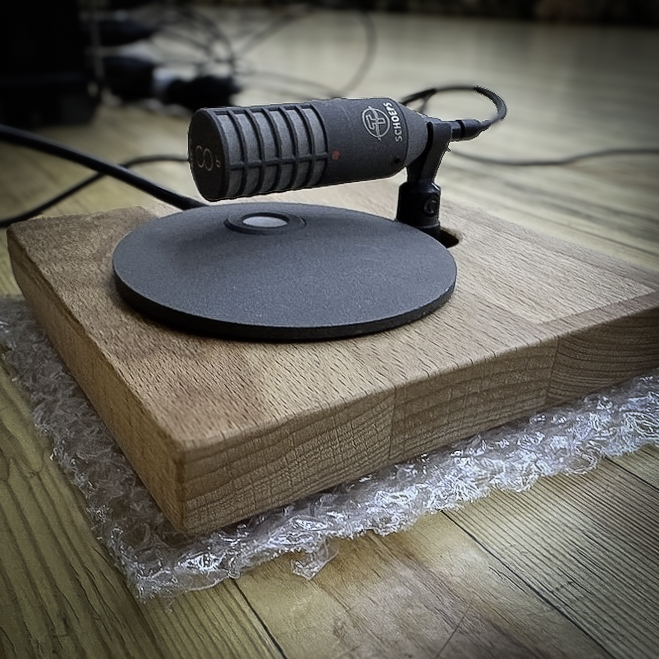
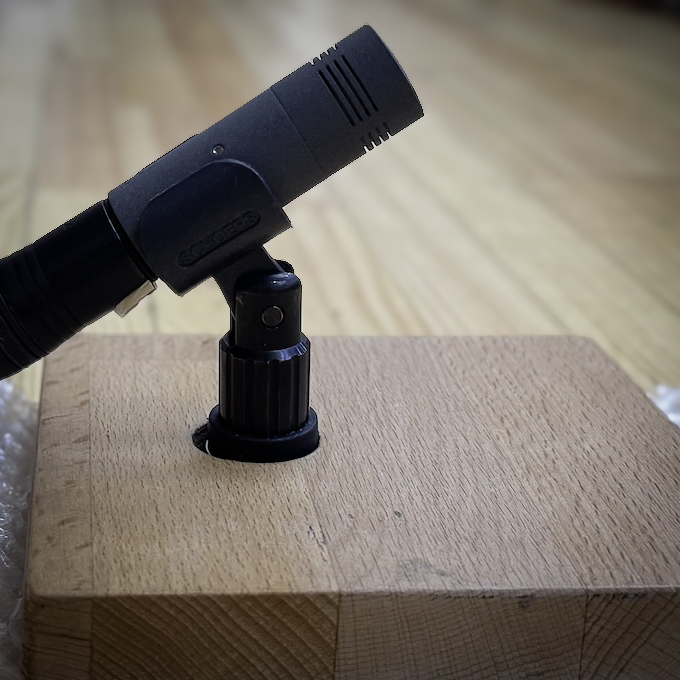
Two super-cardioids are used to capture the room response. They are vertically angled in that way, that their off-axes are pointing towards the organ, to minimize capturing direct sound.
The microphones were equalized using this tool. In addition a general low cut at around 10Hz was applied.
The whole setup was extremely compact and easy to carry, as there were no stands involved.
Equipment
Affiliate-Links